 |
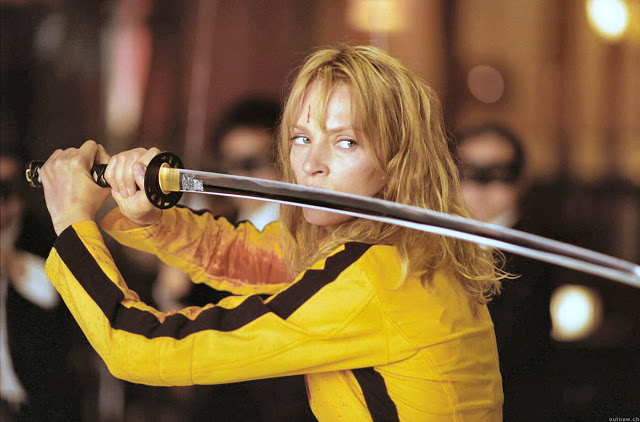
| Uma Thurman (The Bride/Beatrix Kiddo) in Kill Bill Vol. 1 |
Guest post written by Jamie McHale.
I’m going to start this blog post with a bold statement; few directors make films with such strong female characters as Quentin Tarantino. Surprised? Known for stylized ultra-violence and shot to fame with macho flick Reservoir Dogs, you’d be forgiven for thinking Tarantino’s films are more targeted towards guys but let me explain why I think you’re wrong by running down some of his characters and why actually, Tarantino should be celebrated by female cinéphiles.
Shosanna Dreyfus
 |
| Melanie Laurent (Shosanna Dreyfus) in Inglorious Basterds |
Putting the fact she runs a Parisian cinema under Nazi occupation in Tarantino’s Inglorious Basterds aside, Shosanna Dreyfus (Melanie Laurent) should be celebrated as a powerful female character. After escaping persecution, she hatches a plan to kill the upper echelons of the Nazi regime, beautifully described in this quote from her dialogue:
“I am going to burn down the cinema on Nazi night. And if I’m going to burn down the cinema, which I am, we both know you’re not going to let me do it by myself. Because you love me. And I love you.”
Beatrix Kiddo
 |
| Uma Thurman (The Bride/Beatrix Kiddo) in Kill Bill Vol. 2 |
B, The Bride, Black Mamba, Beatrix Kiddo or whatever else you want to call her, Uma Thurman’s portrayal of the blood-thirsty protagonist of Kill Bill is undoubtedly one of cinema’s strongest women. Systematically slaying those who crossed her in a self proclaimed “rip-roaring rampage of revenge,” Uma Thurman secures her place as Tarantino’s muse. Dealing strictly in black and white morality and taking no prisoners (well, apart from Sophie) Beatrix Kiddo secures her places as the femme, the most, fatale. In fact, the Kill Bill trilogy (to-be) showcases a plethora of strong women including orphan to Japanese mafia boss O-Ren Ishii (Lucy Liu) and Elle (Daryl Hannah) who makes up for what she lacks in eyeballs with a mean tiger’s crane.
Elle: “I killed your master, and now I’m going to kill you, with your own sword no less. Which in the very immediate future will become my sword.”
Kiddo: “Bitch…You don’t have a future.”
Jackie Brown
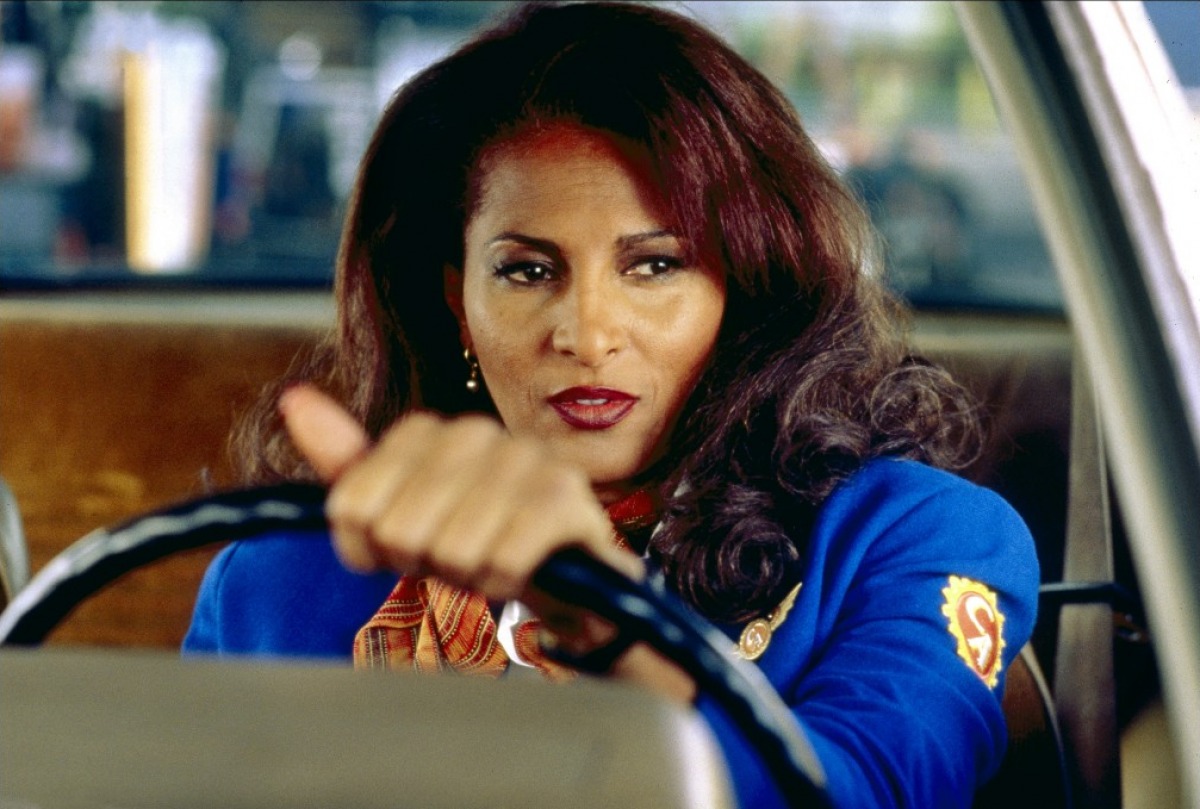 |
| Pam Grier (Jackie Brown) in Jackie Brown |
Pam Grier rose to fame in the 70s through a string of Blaxplotation films and was immortalized in pop culture by Tarantino’s 1997 film Jackie Brown. It follows the story of a struggling flight attendant who ends up smuggling money from Mexico into the US only to be arrested by the police. After agreeing to act as an informant to the police she proceeds to play the situation to her advantage in a dangerous double-crossing game. Exuding power, control and cool, the limitlessly cool Jackie Brown is the ultimate screen siren.
Jackie Brown: Now sooner or later, they’re gonna get around to offering me a plea deal, and you know that. That’s why you came here to kill me.
Ordell Robbie: I ain’t come here to kill you…
Jackie Brown: No, no, it’s OK, it’s OK, now. I forgive you.
Few women on screen are so complex, so powerful, so dangerous as Tarantino’s, granted they may be also be violent and often sadistic but they always take centre stage. Almost all of Tarantino’s women deserve a place in the pantheon of great female leads alongside Clarice, Ripley & Thelma. And let’s just forget about Death Proof, please?
Jamie McHale (Twitter: @jamie_mchale) runs pop culture blog TQS which covers film, TV and music as well as anything else that takes his fancy.
good post! tarantino really gives his women a real sense of self, as well as power
I think Tarantino is just one of those directors who does whatever interest him, whether it involves a female lead or not. Hence why some of his films are very feminist while others are not